


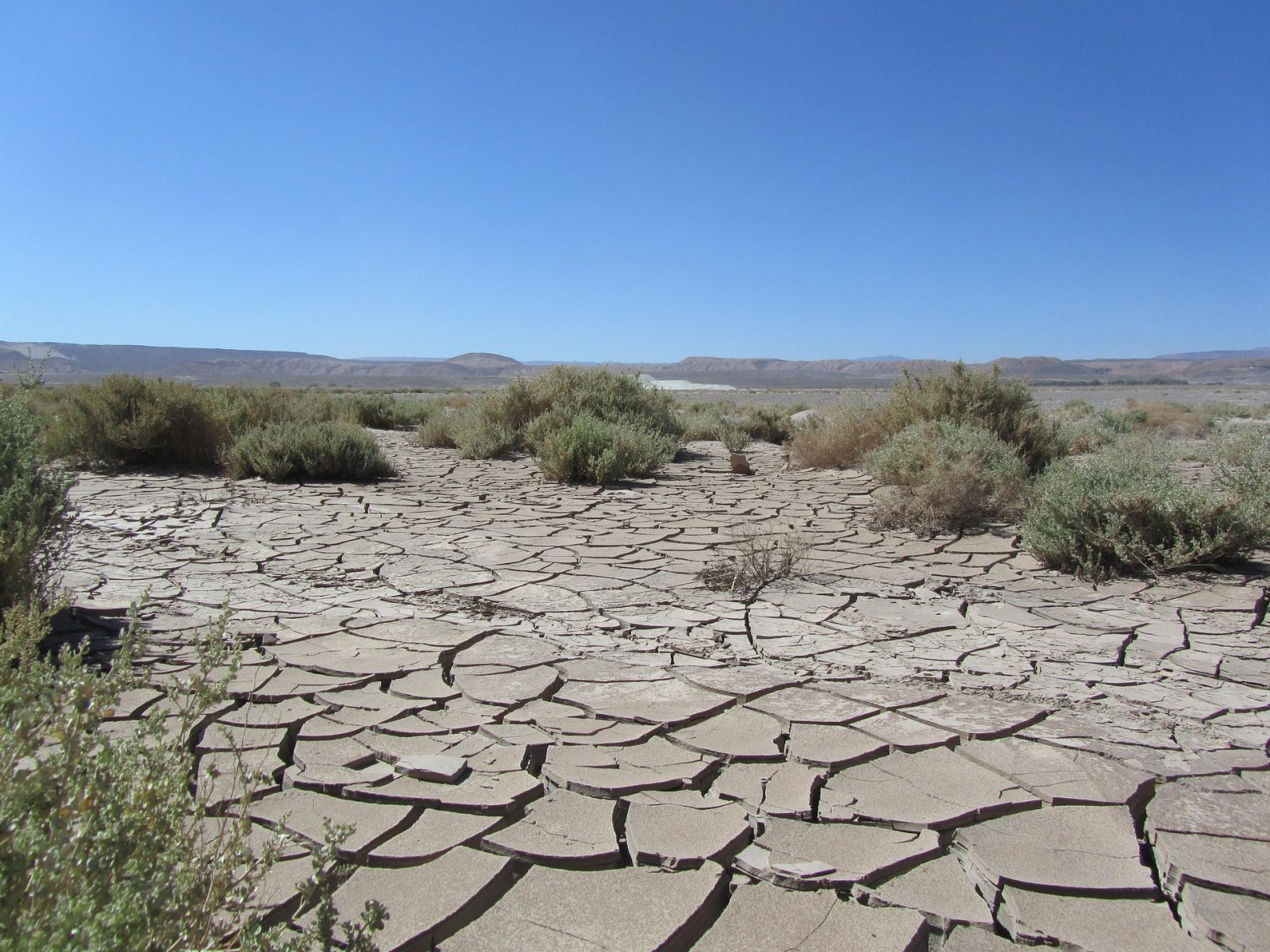
South Africa is already experiencing an exceptionally strong El Niño, with forecasts indicating the 2026/27 event could reach a magnitude unprecedented in the instrumental record.
The South African Weather Service (SAWS) says seasonal forecasts point to an increased probability of below-normal rainfall towards mid-summer, while very high probabilities of above-normal temperatures are expected throughout the forecasting period.
However, scientists have cautioned South Africans against assuming that the strength of the El Niño automatically means the country will experience severe drought.
The latest outlook was discussed during a SAWS media conference on 18 September, bringing together weather and climate experts as well as representatives from disaster management, agriculture and health sectors to discuss preparedness for the 2026/27 summer.
2026/27 El Niño is already firmly established
Professor Willem Landman of the University of Pretoria confirmed that an El Niño event is already under way.
What makes the current event unusual is both its timing and magnitude.
Seasonal forecasts issued during late summer 2025/26 were already indicating the possibility of a strong event, with subsequent forecasts showing a consistent increase in its expected magnitude.
By mid-August 2026, El Niño was firmly established, with persistent and intensifying positive sea-surface temperature anomalies across the central-eastern equatorial Pacific.
It has since developed into a mature coupled ocean-atmosphere phenomenon and is rapidly intensifying.
The rate of Niño-3.4 warming is described as highly unusual, while current observations and forecasts indicate that the event could reach a magnitude unprecedented in the instrumental record.
Forecasts from both the CSIRiMM system, the University of Pretoria model, and the international CCSR-IRI multi-model ensemble point towards a very strong El Niño peaking in late 2026 or early 2027.
Does a strong El Niño mean drought for South Africa?
Not necessarily.
Experts stressed that the magnitude of an El Niño should not be interpreted as a direct indication of how severe its effects will be or where those effects will occur across southern Africa.
The strong 2023/24 El Niño, for example, was not associated with the driest El Niño-season rainfall recorded across the region.
Scientists also cautioned against attributing individual weather events to the El Niño Southern Oscillation (ENSO) at this stage.
The main regional impacts, particularly those affecting the 2026/27 summer rainfall season, are still to unfold.
Instead, people and weather-sensitive industries are being encouraged to follow actual seasonal rainfall and temperature forecasts, which consider ENSO alongside other sources of climate variability.
SAWS forecasts hotter conditions and below-normal rainfall risk
SAWS Lead Scientist for Long Range Forecasting Dr Christien Engelbrecht presented the latest seasonal outlook.
Rainfall forecasts for the South African region show an increased probability of below-normal rainfall towards mid-summer, according to both South African and international seasonal prediction systems.
Temperature forecasts indicate very high probabilities of above-normal temperatures across all three-month periods included in the forecast.
SAWS is encouraging the public and weather-sensitive industries to follow its monthly seasonal forecast updates.
Daily weather forecasts, advisories and warnings should also continue to be monitored because individual weather events cannot simply be attributed to El Niño.
‘El Niño in itself is not a disaster’
Rudzani Malala, Senior Manager for Disaster Risk Reduction at SAWS, stressed that El Niño itself should not be viewed as a disaster.
Instead, preparation and how people respond to changing conditions will be critical.
All current signals indicate that South Africa is dealing with a very strong El Niño.
SAWS provides daily forecasts as well as impact-based weather forecasts and warnings, which the public and affected sectors are being encouraged to follow closely.
The current stormy spring conditions experienced over parts of South Africa are consistent with conditions seen during previous seasons at the onset of a strong El Niño.
However, SAWS cautioned that individual weather events should be assessed through daily forecasts and impact-based warnings rather than being attributed to El Niño alone.
Disaster preparations should start before impacts arrive
The National Disaster Management Centre (NDMC) says preparation should begin before the effects of the El Niño materialise.
According to Phumeza Tyali, Director: Disaster Risk Assessment and Early Warning, forecasts can guide action, but decisions should be driven by local risk assessments.
The NDMC called for coordination across government and society, while highlighting the media’s role in the early-warning system.
This includes explaining forecast uncertainty, avoiding automatically equating El Niño with drought, translating technical forecasts into understandable information and amplifying official warnings and recommended protective actions.
The media was also urged to reach vulnerable communities using appropriate languages and communication formats, counter misinformation and maintain attention on preparedness rather than focusing only on disasters after they occur.
The NDMC’s central message to the media was: “Please help us turn information into action.”
Farmers advised to take a conservative approach
The Agricultural Research Council’s Dr Johan Malherbe also cautioned that the effects of one El Niño can differ significantly from another.
The very strong 1998 event, for example, did not have a corresponding strong effect on central South African weather and crop yields.
During the 2015/16 El Niño, however, below-normal rainfall during 2014/15 contributed to cumulative deficiencies in water resources.
Intra-seasonal variability will therefore remain an important factor.
El Niño is generally associated with reduced grazing and lower summer grain yields.
Agricultural conditions heading into the 2026/27 summer are currently more favourable than they were before the 2015/16 summer, although the ARC cautioned that conditions could look different by the end of summer.
A conservative management strategy is advised during El Niño summers.
Malherbe also advised against cutting down large indigenous trees in preparation for the season.
Instead, they can be lightly pruned before summer, with weak or unstable branches removed to reduce the risk of flying debris during wind gusts while preserving shade during hotter months.
Health sector prepares for extreme heat
The health implications of a hotter summer are also receiving attention.
Celeste Madondo of the Foundation for Professional Development highlighted the particular vulnerability of poorer communities, women and young children, the elderly and people living with chronic illnesses.
South Africa is experiencing more frequent, intense and prolonged heat events, while climate-related health impacts disproportionately affect poorer and more vulnerable communities.
Extreme weather, heat-related disease patterns, food insecurity and waterborne illnesses are also intensifying.
The health sector is preparing for extreme heat through Heat Health Action Plans (HHAPs) focused on vulnerable groups, leadership, warning systems, preparedness, monitoring and evaluation.
What happens next?
SAWS will continue monitoring the developing El Niño and release monthly seasonal forecasts.
Similar media conferences are also expected to be held every second month during the forthcoming summer months.
For the public, farmers and other weather-sensitive sectors, the message is to prepare for the possibility of hotter and drier conditions while continuing to monitor updated forecasts rather than assuming that an exceptionally strong El Niño will automatically result in an equally extreme drought.







Related Articles
SASSA November 2026 grant payment dates could change due to elections
SASSA is reviewing its November 2026 social grant payment dates after Election...

Inside Manchester City’s £900m financial breaches as Premier League sanction looms
Manchester City artificially inflated revenues and reduced costs by more than £900...

Ford Tourneo Custom Titanium X AWD arrives in South Africa
Ford South Africa has expanded its premium people-mover range with the launch...



DStv 7 Day Upgrade: Who qualifies and how the free viewing works
DStv customers who pay their monthly subscriptions in full and on time...
