


Most people dislike waiting. Whether standing in a long queue or counting down the days to an important milestone, waiting often feels frustrating.
For Lionel, however, waiting is his profession.
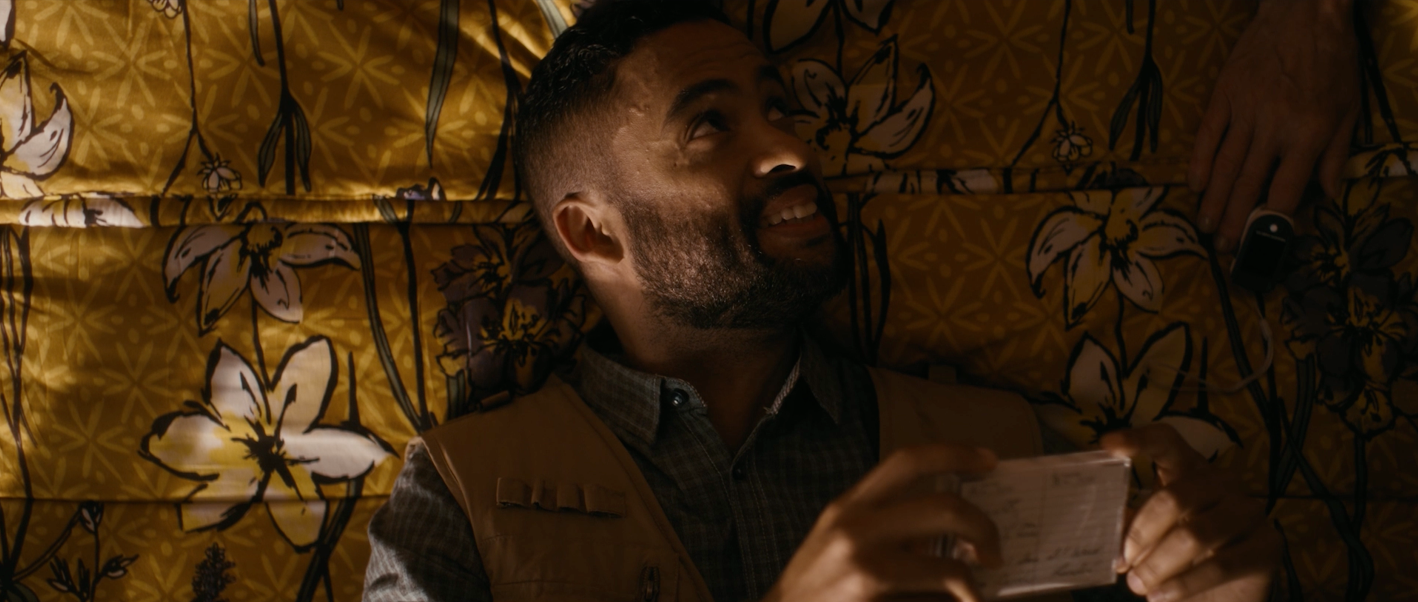
Played by Danny Ross, Lionel earns a living by standing in queues for other people, taking care of time-consuming administrative tasks at government offices. But his routine changes when a stranger, played by Germandt Geldenhuys, offers him a very different job: sitting beside his dying mother, portrayed by Elzabé Zietsman, until she takes her final breath.
The short film Wag ‘n bietjie premieres at the kykNET Silwerskerm Festival.
A story inspired by personal loss
Written and directed by Christian Grobbelaar, the film began life as a thriller before evolving into a more intimate and emotional story.
Inspired by the loss of his own mother, Grobbelaar uses the film to explore grief, mortality and the passing of time.
A different perspective on death
Rather than focusing only on sadness, Wag ‘n bietjie examines the uncomfortable, unexpected and sometimes humorous moments that accompany life’s final chapter.
Grobbelaar intentionally avoided a sombre approach, choosing instead to create a story that celebrates life and encourages audiences to value the time they have.
The meaning behind waiting
Waiting is more than Lionel’s occupation.
According to Grobbelaar, it is something everyone experiences. People wait for promotions, financial security, retirement, the right opportunity or better days ahead.
Through Lionel’s story, the film asks viewers to reflect on how much of life is spent postponing happiness while waiting for a future that may never arrive.
Every detail tells a story
The film’s production design reinforces its central themes.
The dying woman’s room is filled with personal belongings, photographs and memories, allowing her life story to unfold through the objects that surround her.
A reminder to live in the present
Ultimately, Wag ‘n bietjie reminds audiences that while waiting is an unavoidable part of life, living happens in the present.
Rather than putting life on hold, the film encourages viewers to appreciate the moments they are experiencing now.








Related Articles

DStv 7 Day Upgrade: Who qualifies and how the free viewing works
DStv customers who pay their monthly subscriptions in full and on time...
The 100 best TV shows of the 21st century: Did your favourite make the list?
South Africans know the danger of a good series. One minute you’re...
Tyla adds second Pretoria concert as Johannesburg show moves to SunBet Arena
South African superstar Tyla has added a second Gauteng concert to her...



Jackie Chan is alive: Viral death rumours are a hoax
Jackie Chan is alive, despite a viral social media hoax falsely claiming...
