


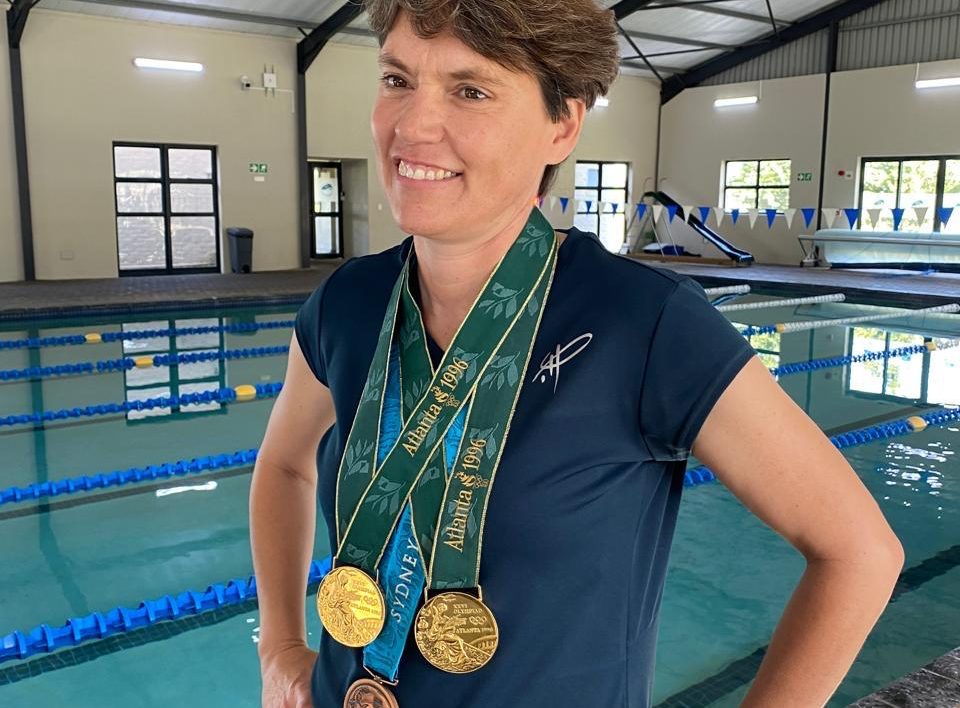
In July 1996, Penny Heyns swam herself into South African sporting history. At the Atlanta Olympic Games, she won gold in both the 100m and 200m breaststroke, becoming one of the defining figures of South Africa’s return to the global sporting stage.
Three decades later, Heyns is still moving forward, just not in the pool. Today, her focus is less on medals and more on purpose, balance and helping the next generation discover their own path, both in and out of the water.
For Heyns, that evolution was never accidental.
“I always felt I swam because I quite simply wanted to retire someday, knowing I did the absolute best I could with my talent,” she says.
Even during her Olympic career, she viewed swimming as part of something much bigger.
“The whole driving force was to use the talents that God had given me. And I saw my swimming career as part of the journey to prepare me to use the platform to make a difference in the lives of others.”
Learning to live without the structure of elite sport
When Heyns retired in 2001, she embraced the freedom that came with life after competition. At the same time, she had to adjust to living without the routine that had shaped every day for years.
“As an athlete, you have a very set routine, and life is quite easy and simple. But outside of sport, it really isn’t.”
It wasn’t training that she missed most, but the structure that surrounded it. Building a new life required a different kind of discipline.
Some routines, however, remained unchanged.
“Part of my faith walk is spending time in the Bible and prayer. That has remained the same throughout my swimming career and now into life beyond swimming.”
Early mornings have also remained an important part of her day.
“I like to wake up early. It’s the quietest time of the day, and it sets the tone and gives one clarity.”
Those peaceful mornings have replaced the pressure of competition with quiet reflection, coffee and the simple rhythm of everyday life before the world wakes up.
Why fame was never the goal
Winning two Olympic gold medals made Heyns one of South Africa’s most recognisable athletes, but fame was never something she actively sought.
“Fame, I hate that word. It was never really something I was comfortable with.”
During her competitive years, she spent much of her time training in the United States and Canada, allowing her to avoid much of the public attention.
“I was lucky to be training in the US and Canada, so to a large degree, I escaped the attention while I was still an active athlete,” she explains.
Returning to South Africa after retirement brought new challenges.
“It became a little more challenging once I retired and moved back to South Africa.”
Over time, her perspective shifted.
“As you get older, you care less about what other people think,” she says. “And I kind of came out of my hibernation and started enjoying life outside the pool.”
She laughs that she often doesn’t notice when she’s being recognised.
“Unless someone comes to me and talks to me, I’m pretty oblivious to it.”
Turning experience into guidance
Like many elite athletes, Heyns faced the question of who she would become once competition ended.
The answer developed gradually through public speaking, mentoring and coaching.
“Since retiring, apart from corporate speaking, which I really love, I became more involved again with coaching on the technical and mental preparation side,” she says.
That work has grown into swim camps, clinics and one-on-one coaching.
“For almost 14 years now we’ve been doing that,” she says. “We do a couple internationally a year and also in South Africa.”
Her experience allows her to support young swimmers not only with technical skills but also with the mental and emotional demands of elite sport.
Beyond coaching, she continues her work in water safety.
“We have two foundations focused on water safety awareness. It started off small, but we have some traction now.”
Seeing the world through hotel windows
Elite sport gave Heyns the opportunity to travel extensively, although she admits she experienced very little of the destinations she visited.
“Whenever I travelled for swimming, I was so focused on getting ready for competition,” she says. “I can’t even tell you what it was like outside the hotel room.”
Many international trips consisted of little more than airports, hotels and competition venues.
“I never left the hotel in Marrakesh. Airport to hotel, and back again.”
One destination remains especially meaningful.
“Atlanta would have to rank highest,” she says. “It felt like home away from home.”
It was there that years of preparation culminated in the performances that secured her place in South African Olympic history.
Discovering a different kind of balance
The balance Heyns enjoys today came long after competitive swimming ended.
“The great saving grace for me was buying a share on a farm and living there for 10 years,” she says.
Farm life offered a very different pace.
“Lots of animals, 13 dogs. Life in nature and being around animals.”
After years of living according to training schedules and race times, she found comfort in wide-open spaces, quiet surroundings and the slower rhythm of everyday life.
A legacy that reaches beyond medals
Looking back, Heyns says Olympic success was never the dream that drove her.
“I never had any ambition to go to the Olympics and win medals,” she says.
Only with time has she fully appreciated the impact sport has had on her life.
“As an athlete, I never appreciated the value of sport.”
Today, her medals remain an important part of South African sporting history, but they no longer define her.
Instead, Heyns hopes her journey encourages young athletes to see sport as both a platform and a preparation for life beyond competition. For her, the greatest legacy isn’t found on the podium, but in helping others discover what comes after the finish line.





Related Articles

South Africa faces unusually strong El Niño as SAWS warns of hotter, drier summer conditions
South Africa is already experiencing an exceptionally strong El Niño, with forecasts...

SASSA November 2026 grant payment dates could change due to elections
SASSA is reviewing its November 2026 social grant payment dates after Election...
Inside Manchester City’s £900m financial breaches as Premier League sanction looms
Manchester City artificially inflated revenues and reduced costs by more than £900...



Ford Tourneo Custom Titanium X AWD arrives in South Africa
Ford South Africa has expanded its premium people-mover range with the launch...
