


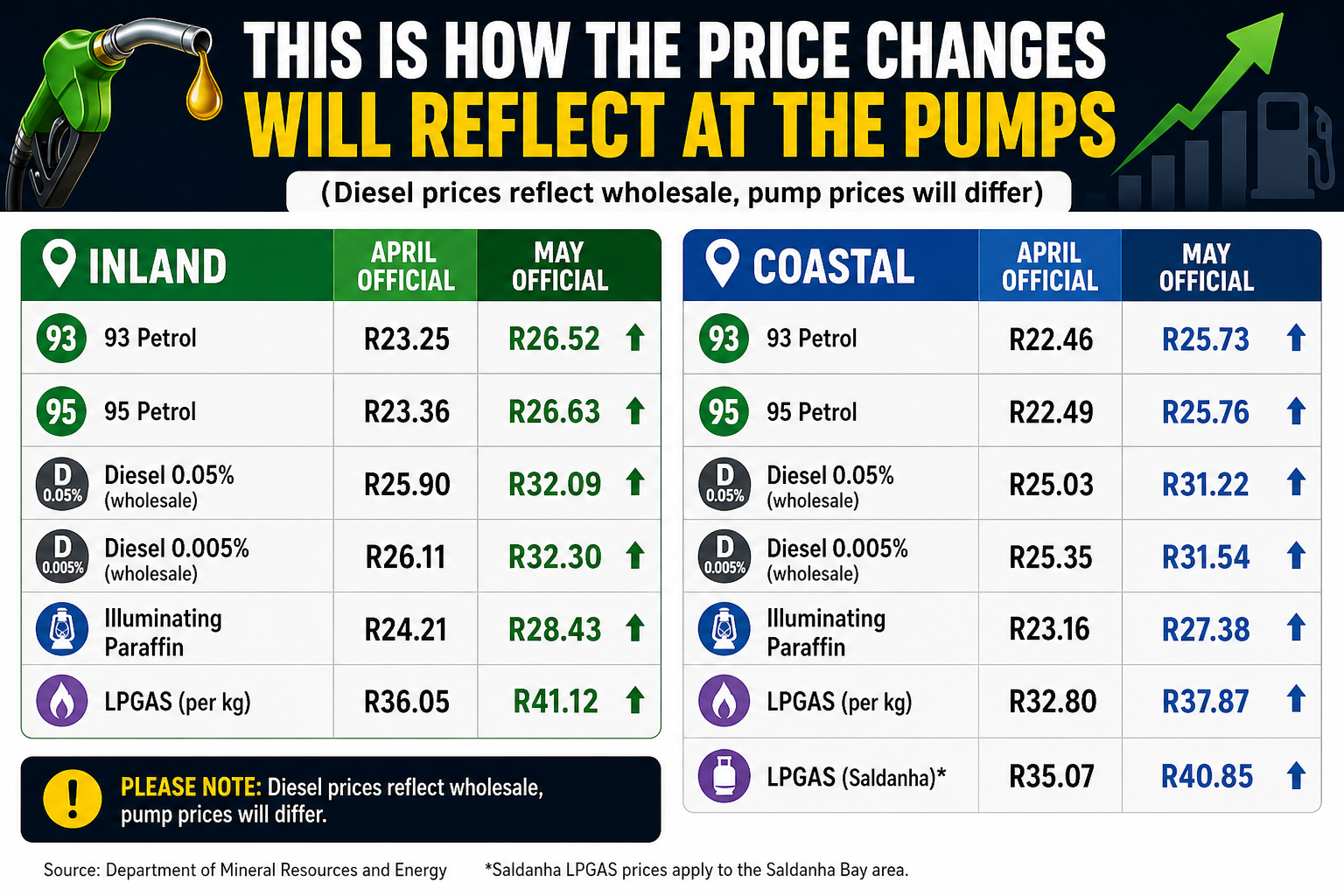
South Africa’s fuel price increase came into effect on Wednesday, 6 May 2026, with sharp hikes across petrol, diesel and LPG now hitting consumers in real time.
After confirmation by the Department of Mineral and Petroleum Resources (DMPR), the focus has shifted from what is changing to what it means for your wallet.
ALSO READ: Fuel price May 2026 confirmed: massive petrol and diesel hike
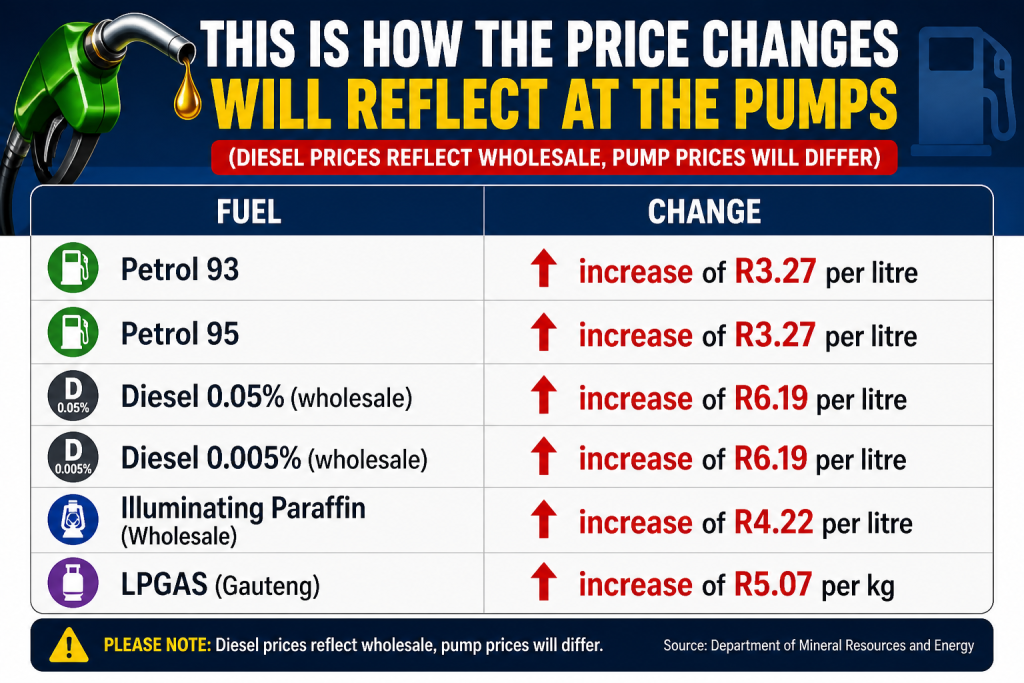
May 2026 fuel increases
- Petrol 93 and 95: +R3.27 per litre
- Diesel (0.05%): +R6.19 per litre
- Diesel (0.005%): +R6.19 per litre
- Illuminating paraffin: +R4.22 per litre
- LPGAS (Gauteng): +R5.07 per kg
These increases are already pushing up transport and living costs.
What changes from today
Now that prices are live, the impact is immediate.
You will notice:
- Higher taxi and transport fares
- Increased delivery fees
- Food price pressure building
- Rising business costs
Diesel increases will hit supply chains first, then filter into everyday goods.
How to save fuel now
Fuel is one of your biggest monthly expenses. Small changes can reduce your usage and protect your budget.
Drive in the most efficient speed range
- Stay between 50 and 90 km/h where possible
- Driving above 100 km/h increases fuel use due to wind resistance
- Use cruise control on open roads
This keeps your engine in its most efficient range.
Accelerate gently and brake early
- Avoid sudden acceleration
- Slow down early for stops
- Drive smoothly in traffic
This reduces fuel spikes and waste.
Use higher gears sooner
- Shift up early
- Avoid high revs
Lower engine strain improves fuel efficiency.
Cut unnecessary idling
- Switch off your engine if waiting longer than 30 to 60 seconds
- Avoid warming up your car for long periods
Idling burns fuel without moving.
Check tyre pressure weekly
- Keep tyres at recommended pressure
- Under-inflated tyres increase resistance
This improves both safety and fuel use.
Reduce weight in your car
- Remove heavy items from the boot
- Avoid carrying unnecessary loads
Even small weight increases can affect fuel consumption.

Improve aerodynamics
- Remove roof racks when not in use
- Keep windows closed at high speeds
This reduces drag on highways.
Service your vehicle regularly
- Replace air filters
- Check spark plugs
- Keep the engine tuned
A well-maintained car uses less fuel.
Plan your trips smarter
- Combine errands into one trip
- Avoid peak traffic
- Use shorter routes where possible
This reduces stop-start driving.
Does aircon use more fuel? Here’s when it does
Air conditioning does use fuel, but how you use it makes the difference.
In city traffic
- Open windows instead of using aircon
- Aircon adds load on the engine at low speeds
On highways
- Use aircon instead of open windows
- Open windows increase drag and fuel use
Smart aircon habits
- Set a moderate temperature
- Use recirculation to cool faster
- Park in shade where possible
- Turn aircon off before reaching your destination
Used correctly, aircon has a smaller impact than high speeds or aggressive driving.
Avoid short trips with a cold engine
- Engines use more fuel before warming up
- Combine short trips into one
This improves overall efficiency.
What to watch next
Fuel prices remain unstable.
Watch:
- Global oil prices
- Rand performance
- Government relief measures
- June fuel outlook
Why this matters
Fuel price increases affect every part of daily life.
Once prices rise, the impact spreads through transport, food and services. Managing fuel use is now essential.








Related Articles

South Africa faces unusually strong El Niño as SAWS warns of hotter, drier summer conditions
South Africa is already experiencing an exceptionally strong El Niño, with forecasts...

SASSA November 2026 grant payment dates could change due to elections
SASSA is reviewing its November 2026 social grant payment dates after Election...

Inside Manchester City’s £900m financial breaches as Premier League sanction looms
Manchester City artificially inflated revenues and reduced costs by more than £900...



Ford Tourneo Custom Titanium X AWD arrives in South Africa
Ford South Africa has expanded its premium people-mover range with the launch...
