


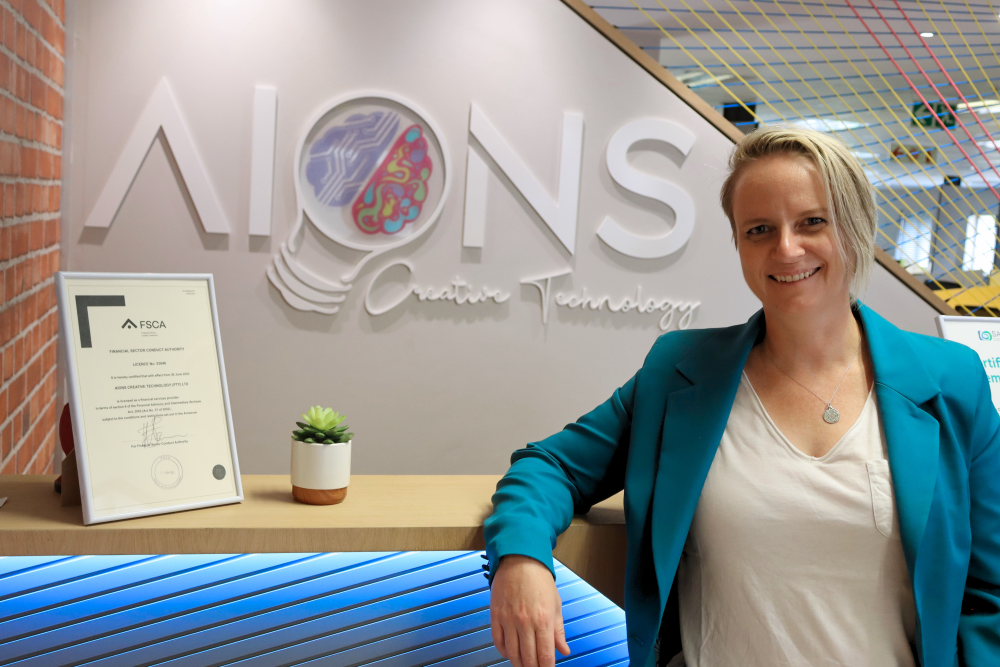
Aions Ventures is urging a rethink of how South Africa approaches small business finance, arguing that the real barrier to growth is not a shortage of capital but failures in execution across the funding ecosystem.
According to Kerryn Campion, Chief Operating Officer at Aions Ventures, funding exists within the system. The challenge lies in ensuring that capital reaches the right businesses in ways that support sustainable delivery and growth.
“There is capital in the system. The issue is that it is not flowing to the right businesses in a way that enables sustainable growth,” she says.
The funding gap appears during fulfilment
The challenge often emerges once small and medium enterprises move beyond the startup phase and begin fulfilling contracts.
Many SMEs successfully secure orders from corporates or government entities but struggle to access the short-term working capital required to deliver those contracts.
Traditional banks typically rely on strict documentation requirements. Businesses are expected to produce audited financial statements, detailed management accounts, and demonstrate sufficient liquidity and collateral.
For emerging enterprises, particularly those operating in underserved communities, these requirements are often out of reach.
As a result, many turn to alternative lenders, where the cost of capital is significantly higher to offset perceived risk.
“When the cost of lending rises to account for defaults, responsible businesses end up paying for the failures of others. That increases pressure before they have even begun to execute,” Campion explains.
Execution discipline across the ecosystem
Access to capital is only part of the challenge. Campion believes execution discipline across the broader business ecosystem remains equally important.
Some businesses that secure funding struggle to manage working capital effectively. In certain cases, funds are redirected away from operational requirements such as supplier payments or order fulfilment.
Procurement structures can also contribute to the problem. Contracts are sometimes awarded at a scale that exceeds the operational capacity of emerging businesses, creating financial and operational pressure.
Financial literacy and capital discipline therefore remain essential, especially for early-stage founders who suddenly gain access to larger funding lines or contracts.
“Working capital is not discretionary income. It is there to fulfil an order, pay suppliers, and sustain operations,” says Campion. “When funding is diverted into non-operational expenses before a business has stabilised its cash flow, it increases the risk for everyone in the chain.”
Late payments worsen the funding cycle
Delayed payment cycles remain one of the biggest structural obstacles for SMEs.
Municipalities and government departments often take months to settle invoices, creating severe cash flow pressure for businesses that have already delivered goods or services.
“A business cannot meet its obligations after supplying goods or services and then waiting months to be paid,” Campion says. “That delay creates a ripple effect across the ecosystem.”
When payments are delayed:
• Businesses struggle to repay lenders
• Funders absorb losses
• Lending becomes more restrictive
This chain reaction increases the cost of capital and limits access for smaller, responsible businesses.
Legal recovery is slow and costly
Recovering unpaid funds through legal channels often offers little relief.
Court processes can take months or even years. By the time a judgment is issued or assets are attached, the original commercial opportunity has often disappeared.
The cumulative effect is a cycle where risk increases, funding costs rise, and access to capital becomes more restricted.
This contributes to the widespread perception that funding is scarce.
In reality, Campion says lenders are responding to instability and risk rather than a lack of capital.
Aligning finance with fulfilment
Aions Ventures focuses on working capital and trade finance, supporting businesses that already have confirmed orders but require structured funding to fulfil them.
The company believes that when funding is directly aligned with fulfilment and repayment discipline, outcomes improve significantly.
“At Aions, we see capable businesses with confirmed orders that simply need structured support to execute,” Campion says.
Building a stronger SME funding ecosystem
Campion argues that meaningful reform requires coordination across the entire funding ecosystem.
Key improvements include:
• Lenders designing products aligned with operational cycles
• Businesses managing capital responsibly and transparently
• Procurement processes assessing operational capability
• Faster and more reliable payment cycles
“If repayment discipline improves and payment cycles stabilise, capital will flow more freely and at a lower cost,” she says.
South Africa’s small business sector holds significant economic potential. However, unlocking that growth will depend less on injecting new capital and more on improving execution across the system.





Related Articles

Shoprite tests FillRite refills that let shoppers buy essentials from R5
What if you only have R5 for cooking oil, sugar or another...

DStv shakes up packages: Here’s what you’ll pay from 17 September
DStv is overhauling its packages for the first time in 15 years,...

Eskom wants an 8.83% electricity price hike from April 2027
South Africans could face another electricity price increase next year, with an...



Takealot shoppers now need to spend R750 to qualify for free delivery
Takealot shoppers will have to put a little more into their baskets...
