


The South African Social Security Agency (SASSA) has reminded beneficiaries whose grants have been selected for review that they will not receive payment during the usual three-day payment cycle.
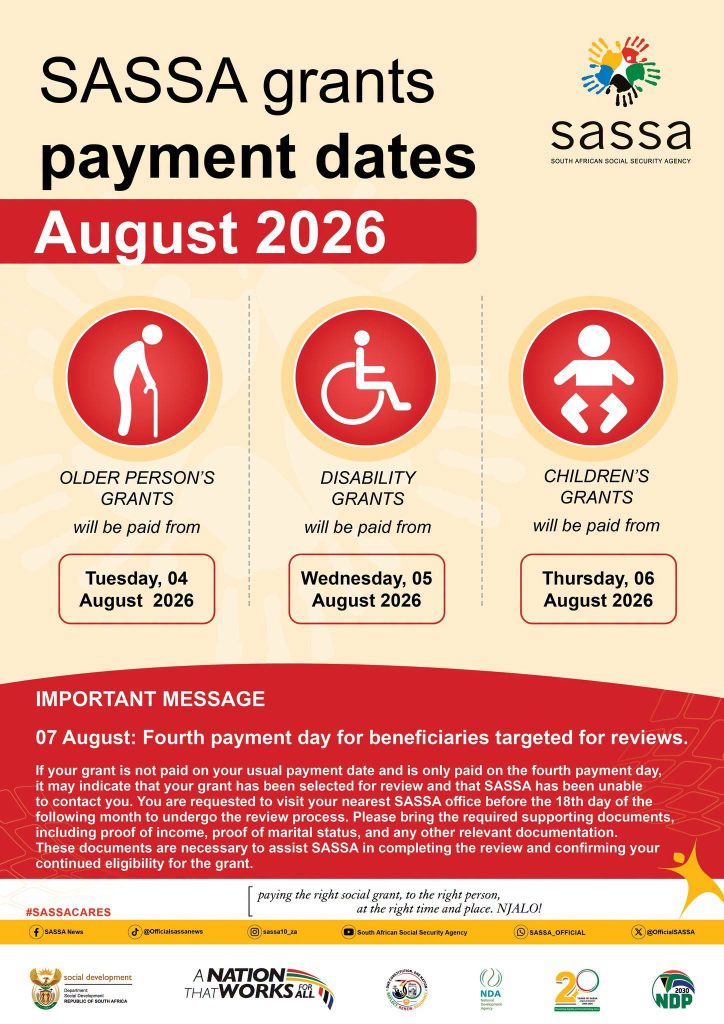
Instead, beneficiaries with grants under review will be paid on the fourth payment day, which falls on Friday, 7 August 2026.
SASSA payment dates for August 2026
The August 2026 payment schedule is:
- Older Persons Grant: Tuesday, 4 August 2026
- Disability Grant: Wednesday, 5 August 2026
- Children’s Grants: Thursday, 6 August 2026
- Grants under review: Friday, 7 August 2026
Beneficiaries who do not receive payment on 4, 5 or 6 August are urged not to panic or immediately visit a SASSA office.
If their grant has been identified for review, payment will be made on Friday, 7 August.
What beneficiaries must do after receiving payment
Once beneficiaries receive their grant on the fourth payment day, they must visit their nearest SASSA office during August to complete the review process.
Failure to respond to a review request may result in the grant being suspended or lapsing in line with the Social Assistance Act.
SASSA notifies beneficiaries selected for a grant review through SMS messages.
It is therefore important that beneficiaries ensure their cellphone numbers and other contact details are correct and up to date.
When beneficiaries must update their details
Beneficiaries must notify SASSA whenever there are changes to their personal or financial circumstances.
These include changes to:
- Cellphone numbers
- Residential addresses
- Marital status
- Income or financial circumstances
- Travel outside South Africa
- Any other information that may affect eligibility
SASSA can only send review notifications using the contact information recorded on its system.
Keeping personal information updated can help prevent unnecessary payment delays or interruptions.
Why SASSA conducts grant reviews
Grant reviews are a legal requirement and help ensure that social assistance is paid only to qualifying beneficiaries.
According to SASSA, reviews are used to:
- Confirm that beneficiaries still qualify for assistance
- Protect the integrity of the social assistance system
- Prevent fraud and abuse
- Maintain an accurate beneficiary database
Documents needed for a SASSA grant review
Beneficiaries attending a review should bring the documents required to confirm their continued eligibility.
Depending on the type of grant, these may include:
- A valid South African ID, including a 13-digit barcoded ID or Smart ID card
- A spouse’s ID, where applicable
- Proof of income, such as recent payslips or pension slips
- An affidavit if unemployed or no longer earning an income
- Bank statements for the previous three months for all active bank, savings or investment accounts
- Proof of residence, such as a municipal account, utility bill or letter from a traditional authority or ward councillor
- Marriage certificate
- Divorce order
- Death certificate of a spouse
- An affidavit in cases of separation or desertion
- Children’s birth certificates for Child Support Grants
- School attendance confirmation, where required
- Death certificates where the death of a spouse or child affects the grant
- Any additional documents requested in the review SMS or notification
Beneficiaries should take original documents and certified copies where required.
What to do if you cannot visit a SASSA office
Beneficiaries who are bedridden or medically unable to visit a SASSA office should contact their nearest office for assistance.
Where applicable, an authorised representative, known as a procurator, may be appointed to act on their behalf.
SASSA encourages the use of online services
To reduce queues and improve service delivery, beneficiaries are encouraged to use SASSA’s digital and online services where possible.
Free Wi-Fi is available at SASSA offices for beneficiaries who need to access online services using their own smartphones.
SASSA officials are also available to assist beneficiaries with digital platforms.
The agency has urged beneficiaries selected for review to act promptly, keep their details updated and submit all required documents to avoid future payment delays or suspension.








Related Articles

Inside Manchester City’s £900m financial breaches as Premier League sanction looms
Manchester City artificially inflated revenues and reduced costs by more than £900...

Ford Tourneo Custom Titanium X AWD arrives in South Africa
Ford South Africa has expanded its premium people-mover range with the launch...

DStv 7 Day Upgrade: Who qualifies and how the free viewing works
DStv customers who pay their monthly subscriptions in full and on time...



World Heart Day: The heart risks you may not know you have
Your heart can feel perfectly healthy even when cardiovascular risk factors are...
